you are here
synthesis
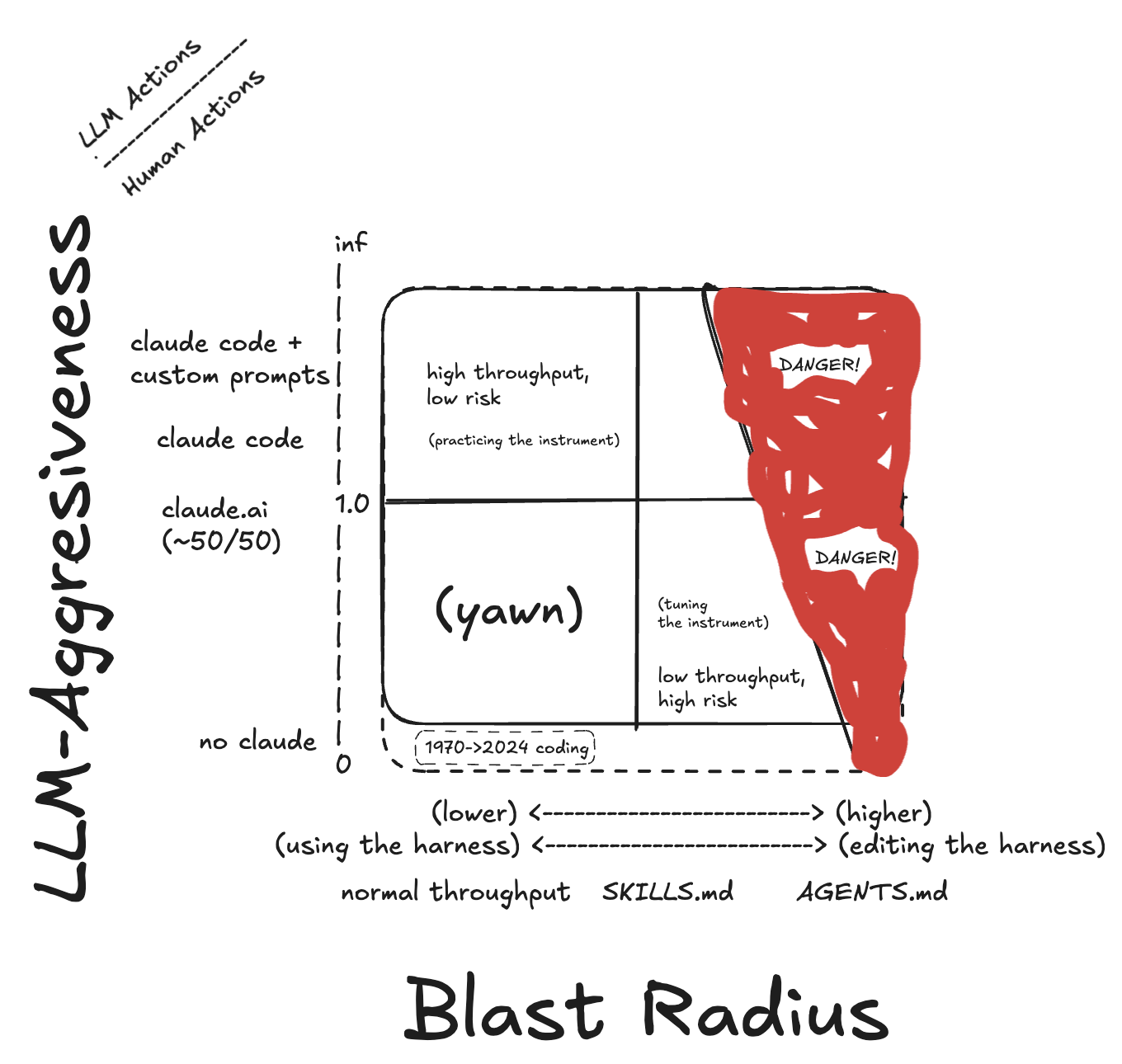
principle · ideaTwo knobs. One axis is blast radius (pace layers). The other is loop tightness (figure-skater). They are orthogonal — and yet you correlate them on purpose, in a way that's deeply counterintuitive.
The counterintuitive insight
The axes are orthogonal — you can pick any combination — but the safe combinations correlate inversely. The bigger the consequence of a change, the more you want fine-grained per-character feedback. The smaller the consequence, the more you can rip through ten of them in a heartbeat loop.
Why it's counterintuitive: fast and safe usually trade off. Here they pair up: fast loop → safer high-blast edits. The loop tightness doesn't slow the change down — it slows the commit down. Lots of micro-feedback, then one ship.
The voice memo that seeded this node was explicit:
Pace layers tells you which layer you're touching. Figure-skater loops tells you how tight your feedback cadence is. The two-knobs metaphor says use both — but the synthesis is: turn the loop-tightness knob in proportion to the blast-radius knob. Both knobs all the way up = AGENTS.md edited per-char with full pause-and-think. Both knobs all the way down = ten node refactors shipped overnight.
The blast-radius axis. Stewart Brand's pace layering applied to this repo: AGENTS.md is slow + high-blast, skill body is medium, examples are fast + low-blast. Skill description is the sneaky one — loaded every turn, so it sits at AGENTS.md altitude despite looking like a skill-body edit.
The loop-tightness axis. Pull arms in, angular momentum conserved, ω rises — the tight chat-loop completes ten turns in the time the wide deploy-loop completes one. Both reach the same destination; you use both.
The two-knobs aesthetic. One knob coarse, one fine, both reach the same number — one reaches it fast. The synth metaphor lets us draw two orthogonal axes and treat them as a single tactile control surface.